Queer Places:
Hagley Hall, Hall Dr, Hagley, Stourbridge DY9 9LG, United Kingdom
Winchester Cathedral, 9 The Cl, Winchester SO23 9LS, United Kingdom
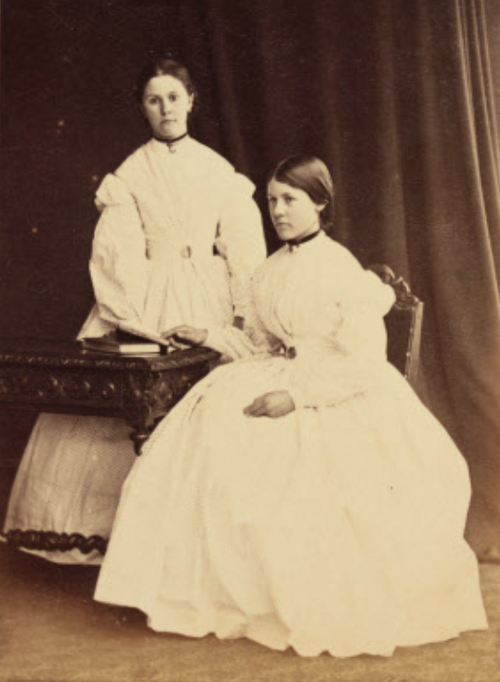 The Honorable Lavinia Talbot (née Lyttelton; January 4, 1849 – October 9, 1939) was a prominent British promoter of women’s higher education during the Victorian and
Edwardian eras. Historically significant in her own right, she is also widely remembered today for her lifelong, deeply affectionate correspondence with her first cousin,
Mary Gladstone Drew (daughter of Prime Minister William Ewart Gladstone).
The Honorable Lavinia Talbot (née Lyttelton; January 4, 1849 – October 9, 1939) was a prominent British promoter of women’s higher education during the Victorian and
Edwardian eras. Historically significant in her own right, she is also widely remembered today for her lifelong, deeply affectionate correspondence with her first cousin,
Mary Gladstone Drew (daughter of Prime Minister William Ewart Gladstone).
Lavinia was born in Westminster, London, as the seventh child of George Lyttelton, 4th Baron Lyttelton, and Mary Glynne. Through her mother, she was the niece of
Catherine Gladstone, making her a first cousin to Mary Gladstone. She grew up in a massive, lively household at Hagley Hall in Worcestershire alongside 11 siblings, including
Charles Lyttelton, 5th Baron Lyttelton and Hon. Alfred Lyttelton.
In 1864, when Lavinia was just 15 years old, her elder sisters married and moved out, leaving her with the daunting responsibility of running Hagley Hall and caring for
her widowed father, a younger sister, and eight brothers. This intensive domestic duty lasted for five years until her father remarried in 1869.
Freed from her household duties at Hagley Hall, Lavinia married the Reverend Edward Stuart Talbot on June 29, 1870. Her husband had recently been appointed the very first
Warden of Keble College, Oxford.
Moving to Oxford, Lavinia navigated a highly traditional university environment that was initially skeptical of the newly founded Keble College. As the Warden's wife, she
managed the household and engaged deeply with Oxford's intellectual community. As her husband's career progressed, he later served as the Vicar of Leeds and subsequently as
the Bishop of Rochester, Southwark, and Winchester.
While at Oxford, Lavinia became deeply invested in expanding educational access for women, who were traditionally locked out of the university system.
She joined an ad-hoc committee alongside prominent figures like Mary Ward, Louise Creighton, and Charlotte Byron Green to
organize university-level lectures specifically for women.
This committee evolved into a formal association dedicated to securing institutional space for female students at Oxford.
When the committee split over whether the new women's residential hall should have a religious affiliation, Lavinia and her husband—both devout Anglicans—championed the
creation of a Church of England hall. Their efforts resulted in the founding of Lady Margaret Hall (LMH) in 1878, the very first college for women at Oxford. The college
opened its doors to its first nine students the following year.
Lavinia remained actively engaged in social and church matters throughout her life. Notably, in 1913, she boldly backed the controversial invitation of
Maude Royden to speak about the exploitation of women ("white slavery") to the all-male Church Congress.
Lavinia and Edward had five children:
Mary Catherine Talbot (1875–1957), who married Lionel Ford.
Reverend Edward Keble Talbot (1877–1949), who became the Superior of the Community of the Resurrection.
Right Reverend Neville Stuart Talbot (1879–1943), who served as the Bishop of Pretoria.
Lavinia Caroline Talbot (1882–1950).
Gilbert Walter Lyttelton Talbot (1891–1915), who was tragically killed in action at Ypres during World War I. The renowned Christian solidarity and rest-house
organization Toc H was named in his memory.
Edward passed away in 1934, and Lavinia survived him by five years. She died in Wantage, Oxfordshire, on October 9, 1939, at the age of 90, leaving behind a profound
legacy in the history of women's education in the United Kingdom.
Lavinia Lyttelton Talbot is buried alongside her husband, the Right Reverend Edward Stuart Talbot, in the churchyard outside Winchester Cathedral in Winchester,
Hampshire, England. Her husband had served as the Bishop of Winchester from 1911 to 1923, and following their deaths, they were laid to rest together on the cathedral
grounds. (Additionally, there is a prominent bronze memorial monument dedicated to her husband located inside Southwark Cathedral, where he also previously served as bishop).
References:
- https://en.wikipedia.org/wiki/Lavinia_Talbot
- https://www.antiques.co.uk/antique/portrait-of-edward-stuart-talbot-1844-1934-bishop-successively-of-ro
Support this project
This website is a passion project researched, developed, and funded entirely by me. If you find the content valuable and would like to help support the ongoing research and hosting costs, any contribution is deeply appreciated.
Thank you for keeping this independent resource alive!
My books on Amazon: Elisa Rolle's books
BACK TO HOME PAGE